

European Chafer Grubs & Lawns - Part 1
It's that time of year when wildlife starts peeling back lawns in search of fatty and delicious European chafer grubs.
It's frustrating, but it's also part of the control.
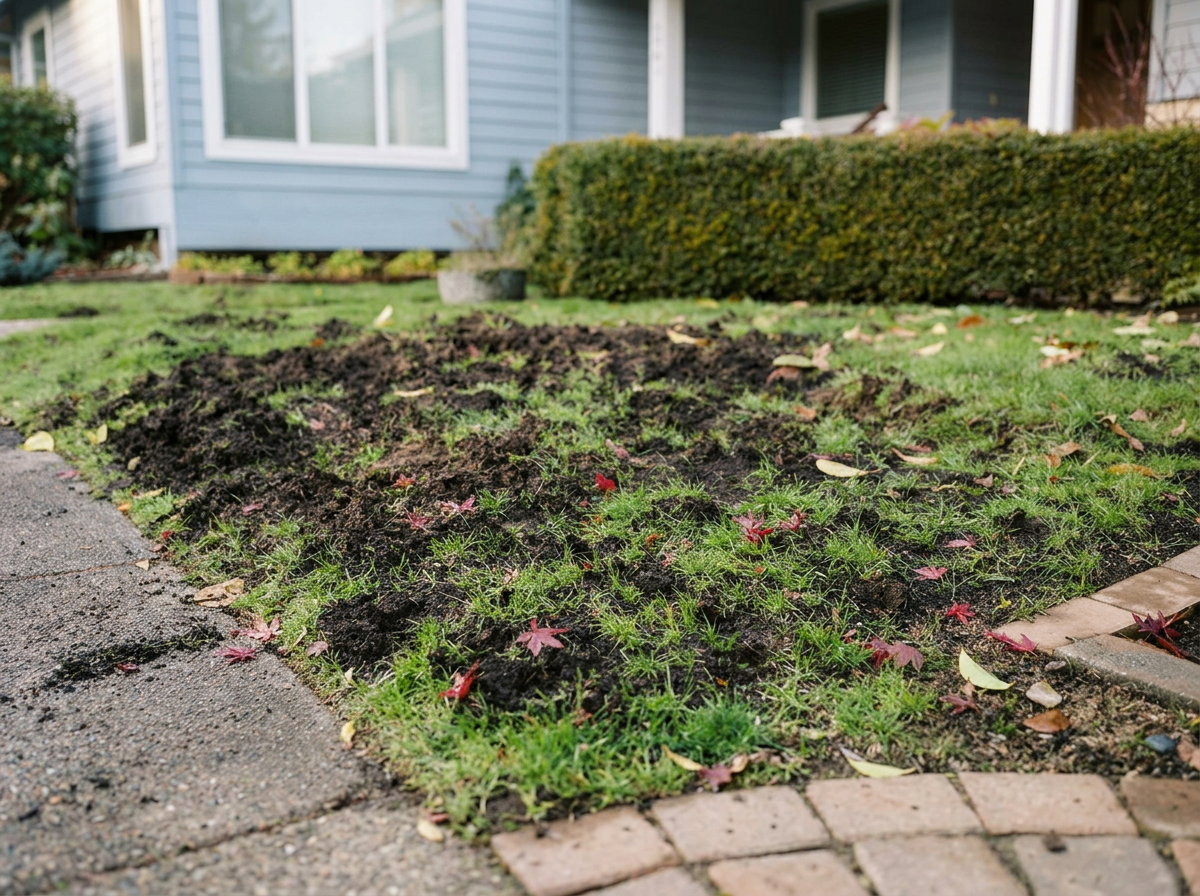
A client’s lawn dug up by wildlife hunting for European chafer grubs.
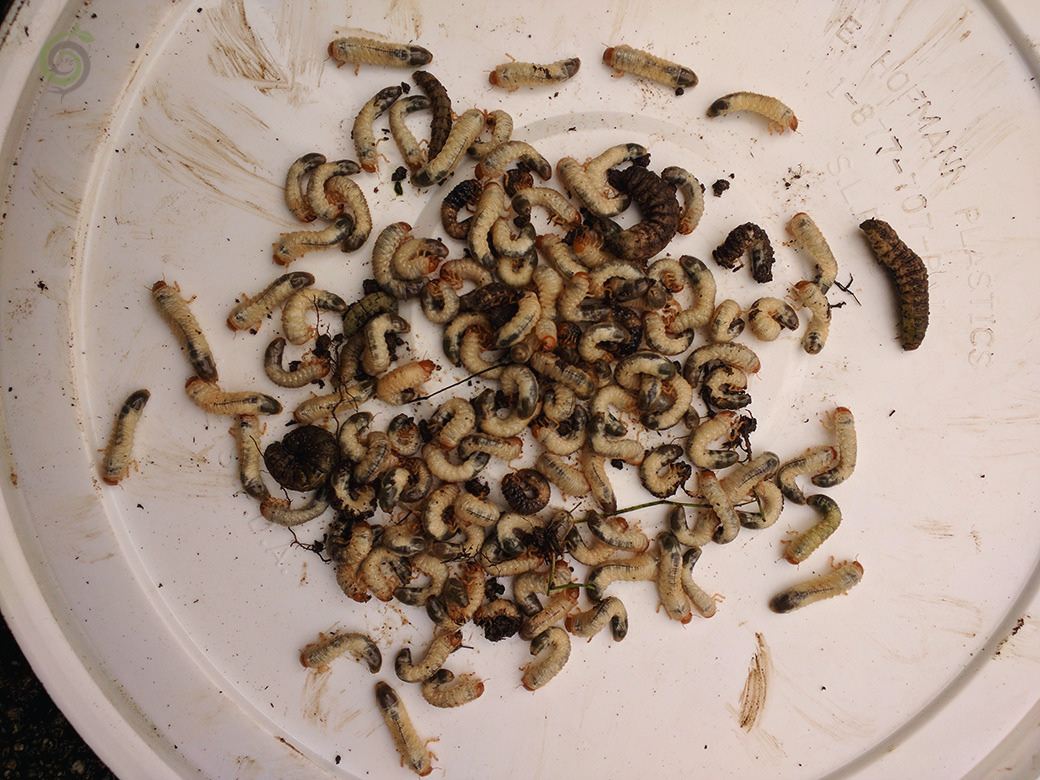
A plate full of chafer grubs and cutworm discovered from the client’s lawn (previous photo).
European chafer larvae (grubs with a brown head and a white body in the above photo) feed on grass roots. The damage is often most noticeable in fall and early spring, especially from the larger, later-stage grubs.
In heavy infestations, lawns can feel spongy and lift easily because the root mat has been eaten back.
The Timing That Matters Most
My recommended repair window is late May into June, when many grubs are shifting into the pupal stage (a non-feeding stage) and more food is available for wildlife. This window of the beetle’s transformation is a good time to focus on reseeding with diverse plant species, soil structure, and root establishment.
What Metro Vancouver Recommends
(high-level)
[Reference Document Link] → Best Management Practices for European Chafer Beetle in the Metro Vancouver Region.
1) Let wildlife do some of the work. Then repair.
Once wildlife feeding is complete and grubs are pupating (or have already pupated), you can add compost and reseed with a diverse mix of plant species; amendments such as kelp meal and worm castings can also help support grass recovery.
2) Employing biological solutions.
Metro Vancouver includes entomopathogenic nematodes (e.g., Heterorhabditis bacteriophora) as a biological solution for chafer management, with effectiveness closely tied to conditions and application methods.
Here’s the part I want to underline: these nematodes are cruisers.
They actively move through the soil to search for hosts. So if your lawn is highly compacted, buying and applying these nematodes can be a waste of your time and money. They need pore space to move. Focus on preparing the soil conditions before applying.
[Video Link] → Building Lawn Resilience to European Chafer Grubs
In Part 2, I will discuss my soil-first approach for restoring and maintaining lawn health from chafer grub damage.
