

European Chafer Grubs & Lawns - Part 2
Most chafer-damaged lawns I see share the same baseline conditions: compacted, low organic matter, and overall poor grass root health.
So the work starts here.
My soil-first approach
(what we did on the lawn that held up)

After living soil treatment.
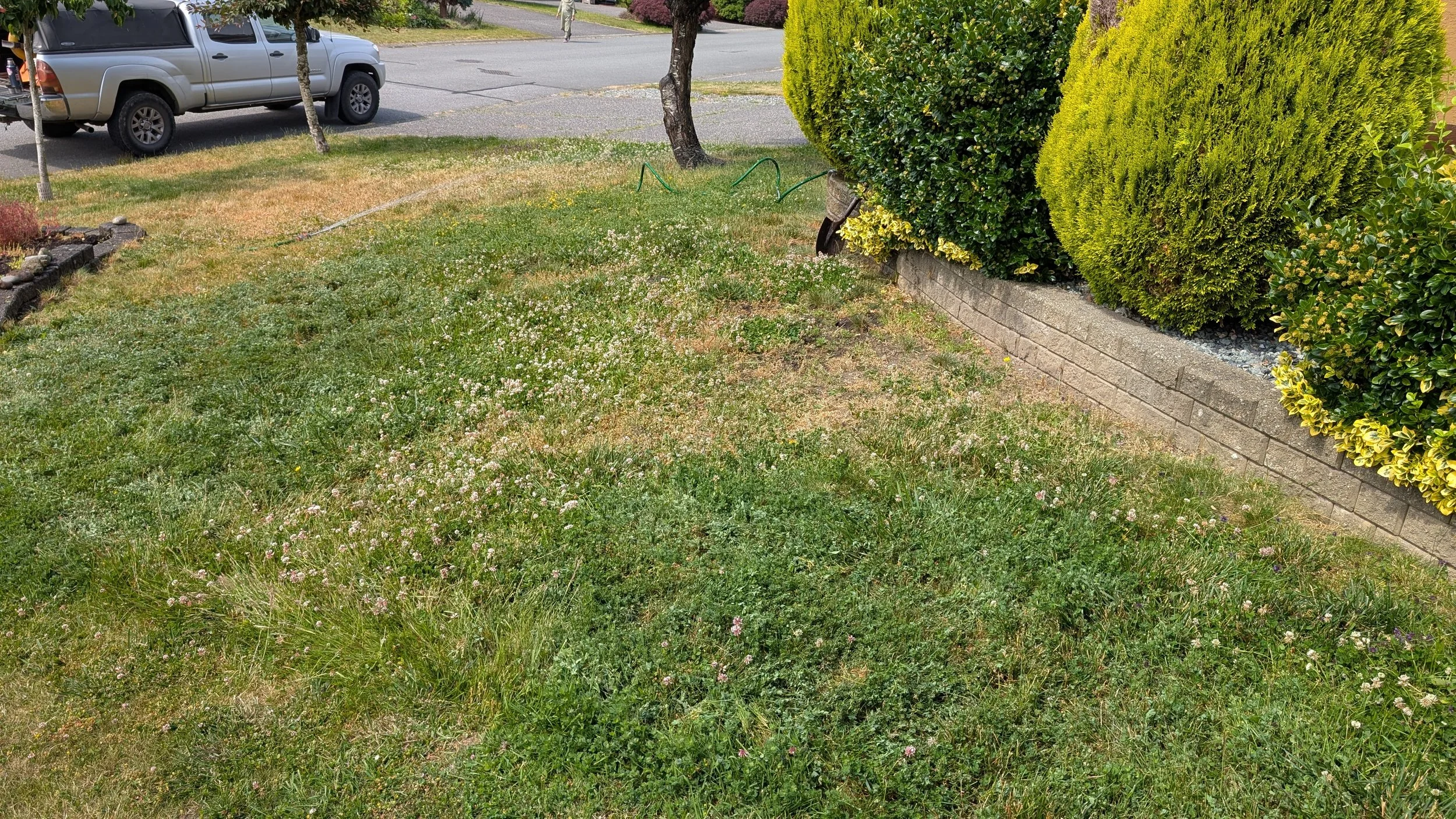
Before living soil treatment.
Soil structure was poor, compacted and had very little organic matter.
Here’s the general sequence I used (and recommend):
Decompact to open the profile for air + water movement. Lift the soil with a tool like a broadfork; do not flip. If there is life, you want to preserve that life that prefers living below the soil surface and avoid exposing it to the elements.
Topdress compost. High-quality compost can be both hard to come by and hard to access. If municipal compost is the only thing available to you, that’s okay to use.
Reseed with diversity. Deeper roots. Different root shapes. Better coverage and different diets that can support biological diversity.
Inoculate and support seed establishment with compost tea and extract. This is where high-quality liquid bio-blends come into play.
[Video Link] → How to make a simple compost extract. ←
Irrigate consistently through establishment, then taper once fully covered.
Delay mowing early on so plants can build roots and density. I would even go so far as to let the grasses go to seed each year so they can feed both pollinators and birds.
The goal isn’t zero grubs
The goal is a lawn that’s thick, rooted, and less likely to get peeled back.
The kind of lawn that provides ecosystem services like water purification, toxin decomposition, nutrient retention (instead of letting nutrients leach), and pollinator/bird habitat.
The type of lawn that’s healthier in the long run.
[Reference Document Link] → Best Management Practices for European Chafer Beetle in the Metro Vancouver Region.
If you prefer to watch this instead of reading it, the full video is here →Building Lawn Resilience to European Chafer Grubs.
I also briefly talk about Heterorhabditis bacteriophora, a bacterial-feeding nematode sold in garden stores to help deal with European chafer grubs.
