

Understanding soil life through microscopy
I have two more One-Day Microscopy workshops coming up at the Burnaby school in Riverway, and I’d love to have you join me.
In the first session, more than half of the students who brought soil samples did not find any predators under the microscope.
That’s important because predators, like the one below, are part of what makes soil function.
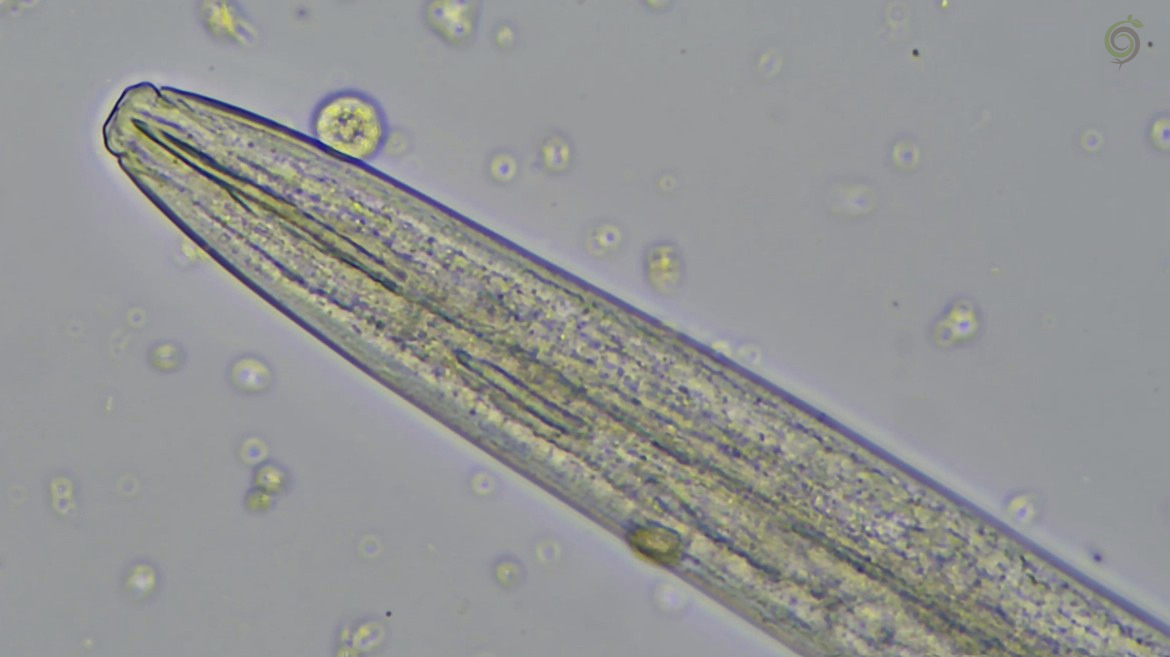
A large, moulting predatory (or omnivorous) nematode found in a soil sample.
Soil Health
When we talk about soil health, we’re talking about whether soil is functioning as a living ecosystem. And one important sign of that living system is the presence of predators.
In the soil food web, predators such as protozoa and beneficial nematodes help release nutrients by feeding on bacteria, fungi and other larger (albeit microscopic) organisms. As they graze, they help turn tied-up nutrients into plant-available forms. They also help regulate microbial populations, which supports a more balanced and dynamic soil ecosystem.
Nematodes as Soil Indicators
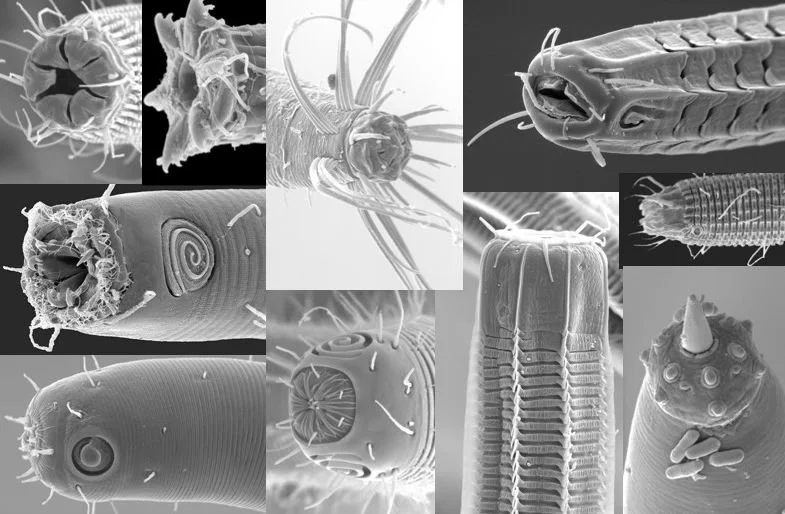
Nematodes are especially useful as indicators because different groups respond differently to stress and disturbance.
Some are opportunistic and show up quickly. Predatory or omnivorous nematodes, on the other hand, are more sensitive and recover more slowly. So when we find higher trophic organisms, it suggests that the soil supports a more developed and functional food web.
Like wolves in a forest.
Okanagan Vineyard Trial
The structure of your nematode community, its diversity, and functional roles are directly related to soil quality.
One exciting example came from a vineyard trial in the Okanagan, where I happened to extract this predatory nematode from one of our biologically treated plots with native cover crops planted as understory.
They were rare, if not absent, in the industrially treated plots, as they are sensitive to pollutants and disturbances, making them valuable for monitoring soil conditions.
Learning to look for these organisms can be so valuable.
